A Retired Child Development Specialist Reveals the 21-Day Plan That Has Helped Over 200 Parents Reclaim Their Children from Screen Addiction. Without Tantrums. Without Taking the Phone Away by Force.
Your child is not broken. The phone filled a vacuum. This plan rebuilds what the phone replaced.
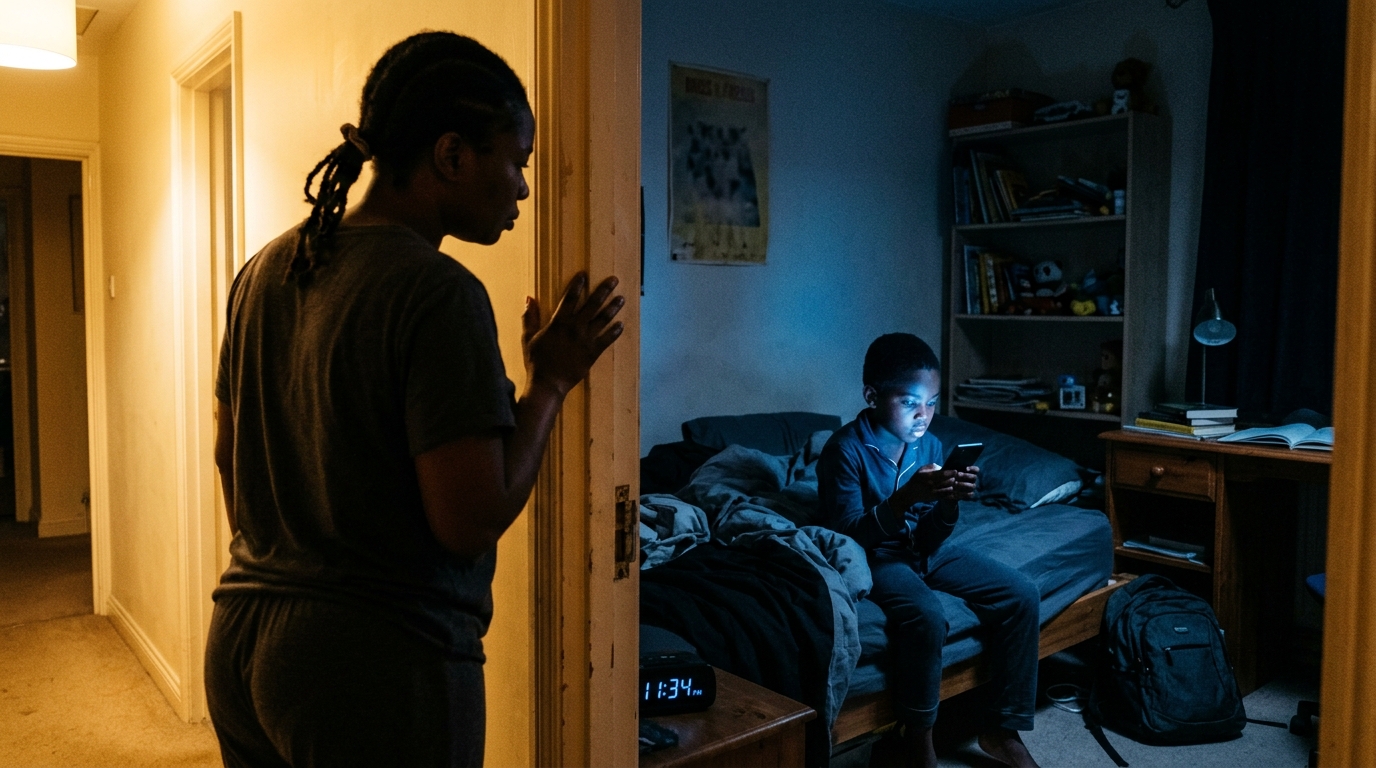
The phone.
It is the first thing he reaches for. Before "good morning." Before breakfast. Before his feet touch the floor. The phone is already in his hand, screen glowing, YouTube already playing from where he left it at midnight when you thought he was sleeping.
"Tochi, put the phone down. Get ready for school."
Nothing. He heard you. You know he heard you because his jaw tightened. He is choosing the screen over your voice. At 10 years old, your child is choosing a 6-inch device over his mother's instruction.
You take the phone. The eruption is immediate. Not sadness. Rage. The disproportionate, wild-eyed fury of a child whose supply has been interrupted. "Give it back. I hate you. You're not fair." The phone is no longer entertainment. It is regulation. He cannot regulate his mood, his boredom, his discomfort, or his energy without it.
You didn't give him a device. You gave him a dependency. And now you cannot take it back without a war.
"I am the one who gave him the phone. That is the part I cannot say out loud. I handed it to him at age 6 because I was tired and needed 30 minutes of quiet. Those 30 minutes became 6 hours. His grades are dropping. His teacher says he cannot concentrate. He eats with the phone. He sleeps with the phone. When I take it away, he becomes a person I do not recognise."
"I created this. And I do not know how to undo it without destroying our relationship."
If the phone is the first thing your child reaches for in the morning, if taking it away produces rage, if your child cannot eat, sleep, or sit still without a screen, keep reading.

The Night I Found Him at 1am
Light from under Tochi's door. He was sitting up in bed, phone 6 inches from his face, watching YouTube Shorts. One video every 15 seconds. Swipe. His eyes were glazed. Not watching. Consuming.
"Tochi, it is 1 o'clock in the morning."
He looked at me with the expression of someone pulled from a trance. Not guilty. Disoriented. He didn't know it was 1am. The phone had eaten his sense of time.
I sat on my bed afterward and cried. My 10-year-old son was addicted. Not casually. Behaviourally. The device had become his primary emotional regulation system. And I was the one who gave it to him.
Everything I Tried That Made It Worse
Cold Removal
"No more phone." Tantrums for 3 days. Day 4: I surrendered. He learned resisting hard enough wins.
Screen Time Limits
Set phone to lock after 2 hours. He cracked the passcode in a week. Used other devices instead.
Parental Control Apps
Two apps. N3,000-N5,000/month each. Monitored content. Did NOT address the compulsion. The addiction shifted shape.
Alternative Activities
Board games, art supplies, sports gear. N32,000 total. 15 minutes each. "Can I have the phone now?"
"No Phone at Meals"
He sat and stared at the wall. Didn't eat. Didn't speak. Family dinner became punishment.
Yelling
"PUT IT DOWN." Something died in his eyes. Not fear. Shame. He began hiding the phone.
2 years
battles
change
The Specialist Who Said: "Stop Fighting the Phone"
Mrs Folasade Adeyinka. 64. Retired child development specialist. 30 years studying children's behavioural patterns. The last 10 focused on screen dependency.
"Stop fighting the phone. You cannot win a war against a device designed by the most sophisticated behavioural engineers on earth. The phone is not the problem. The phone is the SYMPTOM. Your child has lost four essential systems: boredom tolerance, emotional regulation, sustained engagement, and smooth transitions. The phone replaced all four. Rebuild all four. The phone becomes unnecessary."
She outlined a 21-day plan. Not removal. Replacement. Not fighting the phone. Making the phone obsolete.
The 3-Phase System
The Replacement Architecture
Build alternative systems BEFORE reducing screen time. Specific activities and routines that give the child's brain something engaging. No removal. No confrontation. Building only.
The Gradual Reduction
Non-confrontational screen reduction. 20-30 fewer minutes per day with a replacement in place for every minute removed. The child trades time. No tantrums.
The New Normal
Sustainable routine. 1-2 hours of intentional screen time instead of 6 hours of compulsive consumption. The phone keeps its place. Loses its throne.
I Almost Didn't Start
Another parenting "method." Another expert. I'd spent N80,000 and 700 hours. And now a retired specialist was telling me the answer was a 21-day plan where I don't even take the phone away in Week 1?
But I looked at Tochi. 10 years old. 6 hours of screen time daily. "Mummy, where is the phone?" before "good morning." And I thought: everything I've tried for 2 years has FOUGHT the phone. None of it has REPLACED what the phone provides. What if the strategy was wrong, not the effort?
I started on a Monday.
Days 1-7: I Didn't Touch the Phone
Day 1: First replacement activity. 20 minutes after school, before homework. Tochi resisted. "Can I just use the phone?" I followed the script: "You can use the phone after. This comes first." He participated reluctantly.
Day 3: The resistance was gone. Neutral. Not enthusiastic. But the habit of "something before the phone" was forming.
Day 5: Second replacement added. Evening activity before bedtime phone. Tochi said: "This is actually okay." From a child in full tantrum mode two weeks earlier, "okay" was everything.
Day 7: Screen time had reduced by 45 minutes. Without a single removal. Without confrontation. Without a tantrum.
The phone's monopoly had been broken not by taking it away, but by giving something else a seat at the table.
Day 12: He Put the Phone Down Himself
He was in the middle of a replacement activity. The phone was on the table beside him. Screen off. He hadn't picked it up in 40 minutes. Hadn't asked. Hadn't noticed.
Later that evening, he was watching something after dinner. 25 minutes. Then he put the phone face-down on the couch, stood up, and walked to his room.
"Tochi, are you okay?"
"I'm going to finish my building project."
He put the phone down. Himself. Without being told. Without a timer. Without an app locking the screen. He chose something else.
Day 21: He Left the Phone in the Living Room
A Saturday morning. 7am. Tochi's door was open. He was sitting on the floor building with blocks that had gathered dust for 8 months. The phone was on the couch in the living room. Not in his hand. Not in his room. On the couch.
He looked up: "Mummy, look what I'm making."
Not "Mummy, where is the phone." "Mummy, look what I'm making."
I stood in the doorway and breathed. Because I was looking at my son. My actual son. The curious, building, creating boy who had been buried under 6 hours of daily screen consumption. He was still there.
before
Day 21
What Changed Beyond the Screen Time
The Grades
"Tochi's concentration has improved markedly. Whatever changed at home is showing in school."
The Sleep
Falls asleep by 9pm without YouTube. Wakes rested. The 1am scrolling is over.
The Meals
Sits at dinner without a screen. Tells me about his day. Family dinner is warm again.
Our Relationship
"Mummy, can we play?" The child who replaced me with a phone was choosing me again.
It Wasn't Just Tochi
My neighbour's daughter. 8. "By Day 10, I hadn't taken the iPad once. Her screen time dropped by 2 hours because she was choosing other things. The meltdowns stopped because there was nothing to melt down about."
My sister's son in Abuja. 12. "Phase 1 worked because you're not fighting them. By Day 14, he asked me to play a board game. He hasn't asked me to play anything since he was 9."
Same plan. Different children. Same result: when you rebuild what the phone replaced, the phone loses its power. Not by force. By obsolescence.
Why I Documented This
I documented Mrs Folasade's plan because no parent should have to choose between their child's wellbeing and their relationship with their child. Taking the phone away by force works for 3 days and destroys trust for 3 months. The parental control apps monitor behaviour without changing it. And yelling at your child about the phone ensures they hide it instead of putting it down.
I put everything inside one structured, day-by-day guide. The exact activities. The exact scripts. The exact schedule. Every phase. Every transition. Everything a parent needs to follow the plan from Day 1.
The 21-Day Screen Detox Plan for Children
Mrs Folasade's Method for Reclaiming Your Child from Screen Dependency
Stop fighting the phone. Rebuild what it replaced. The phone becomes optional.

What's Inside the Plan
Phase 1: The Replacement Architecture (Days 1-7)
Build alternatives before reducing a single minute. Specific activities and routines. No removal. No confrontation.
Phase 2: The Gradual Reduction (Days 8-14)
20-30 fewer minutes per day with a replacement in place. The child trades time. Graduated. Collaborative.
Phase 3: The New Normal (Days 15-21)
Sustainable routine. 1-2 hours intentional instead of 6 hours compulsive. The phone loses its throne.
The 4 Systems Rebuild
Boredom tolerance. Emotional regulation. Sustained engagement. Smooth transitions. The four systems the phone hijacked.
Parent Scripts
Word-for-word: what to say when the child asks for the phone, during a tantrum, when they resist. Words that de-escalate.
What Other Parents Are Saying
"7 hours a day down to under 2. Without a single tantrum. Without taking the phone once. He now asks to go OUTSIDE. A child who hadn't gone outside voluntarily in 8 months."
"My daughter screamed when I took her phone. This plan doesn't take anything. You add first. On Day 18, she left her phone charging and went to her room to draw. I stared at her phone on the counter like it was a miracle."
"TWINS. Both addicted. Phase 1 activities are designed for groups. They started playing TOGETHER. My husband found them building a fort. He looked at me like I'd performed a miracle. It's not a miracle. It's a plan."
"My son is 7. Tantrums when tablet removed. Couldn't eat without Cocomelon. By Day 12: 1 hour a day. By Day 21: playing with actual toys. His nursery teacher said his attention improved visibly."
"In London, every child has a phone. This plan doesn't take the phone. It changes the RELATIONSHIP with the phone. 90 minutes a day instead of 5 hours. He doesn't panic when it's not in his hand."
"The parent scripts saved my sanity. I used to yell 'PUT IT DOWN.' Now I say the exact words from the plan. The response is completely different. The scripts turn confrontation into transition."
Instant download. 14-day money-back guarantee.
Plus: 2 Essential Bonus Guides
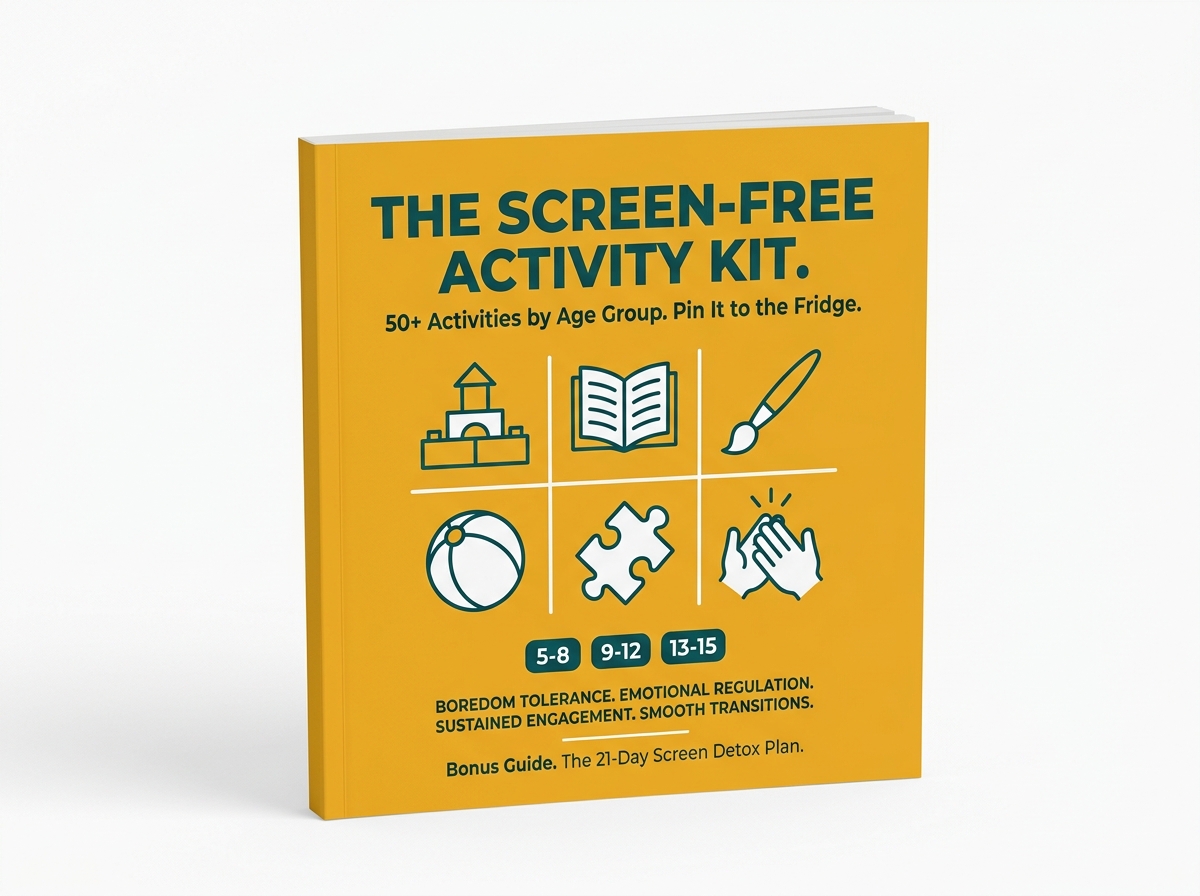
Screen-Free Activity Kit
50+ activities by age group (5-8, 9-12, 13-15). What you need, how long it takes, which screen slot it replaces. Pin it to the fridge.
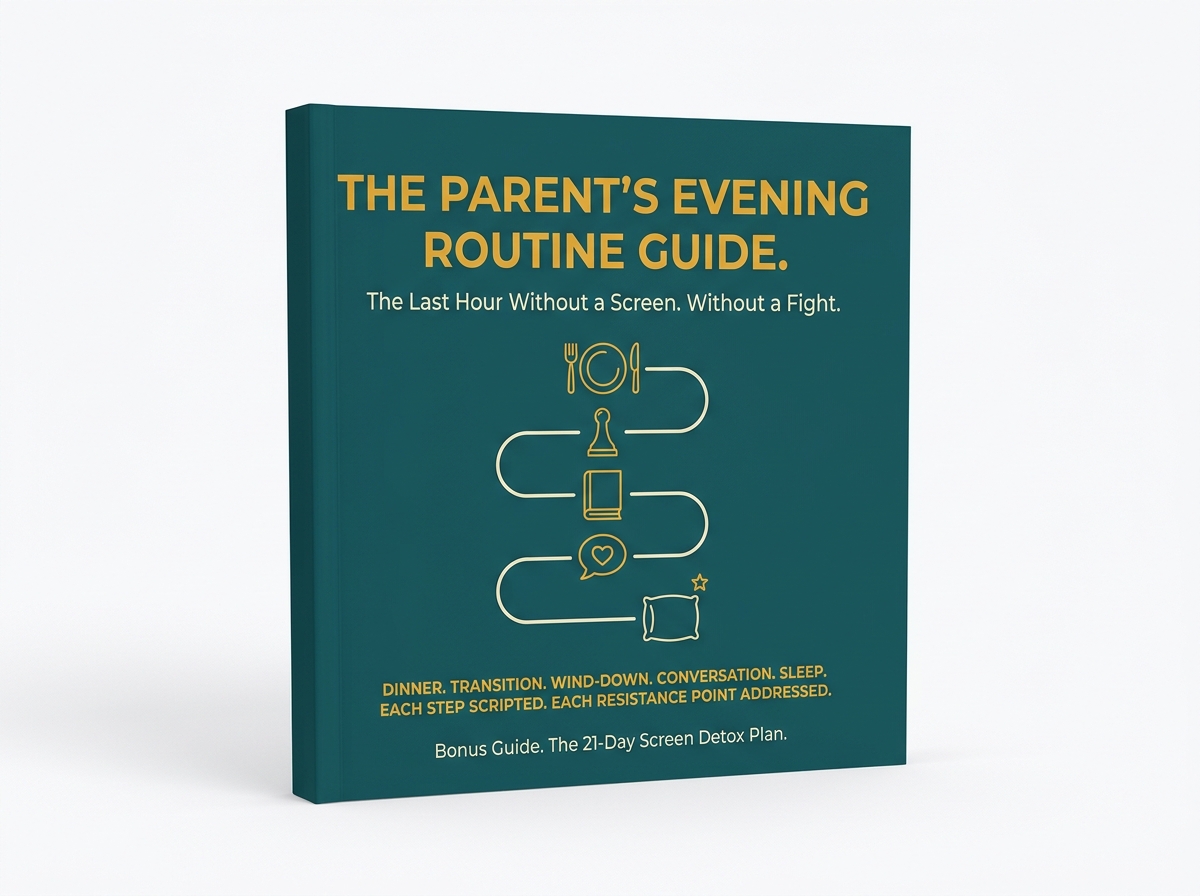
Parent's Evening Routine Guide
Complete bedtime routine removing screens from the last hour. Dinner, transition, wind-down, reading, sleep. Each step scripted.
14-Day Money-Back Guarantee
Follow the plan for 14 days. If your child's screen time has not reduced meaningfully AND without daily tantrums, full refund. No questions asked.
Screen time drops or you pay nothing.
Right Now, You Have a Choice
Fight the Phone Again Tomorrow
Another morning reaching for the phone before "good morning." Another tantrum. Another N5,000 on an app that monitors but changes nothing.
The phone was engineered by thousands of the smartest people on earth. You can only rebuild what it replaced.
Rebuild What the Phone Replaced
21 days from now: The phone is on the couch. Your child is on the floor. Building. Drawing. Playing.
N9,800. 21 days. No fighting. Your child comes back.
P.S. #1: What will tomorrow morning look like? Will the phone be the first thing your child reaches for? N9,800 and 21 days stand between tomorrow's phone-first morning and the Saturday your child shows you what they built.
P.S. #2: Parental control apps cost N3,000-N5,000/month. N36,000-N60,000/year monitoring behaviour without changing it. This plan costs N9,800 once and changes the behaviour.
P.S. #3: Mrs Folasade: "The phone filled a vacuum. Replace all four systems and the phone becomes what it should have been all along: one small part of a full life." N9,800 to rebuild the four systems.